LEARNING · TRAINING · PERFORMANCE
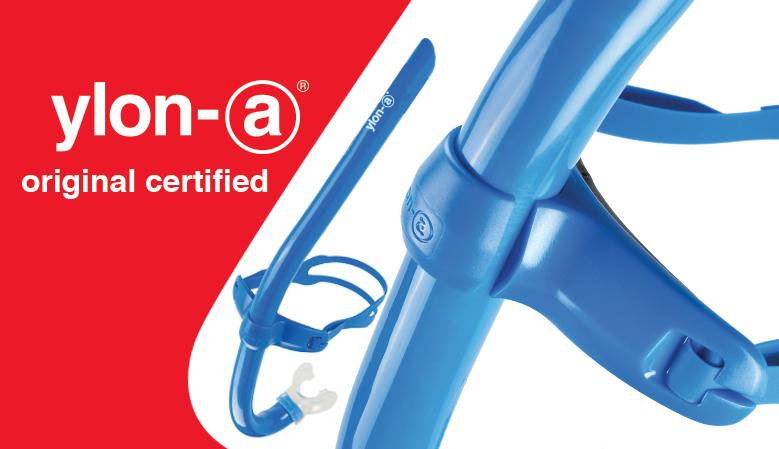
The front snorkel designed for learning, training and preparation for performance
A tool to refine your swimming technique
The front snorkel designed for learning, training and preparation for performance
Looking for a reliable, technical front snorkel truly designed for swimming or finswimming? This guide covers everything.
Read more
The history of the front snorkel, its use in swimming and finswimming, how to choose the right one, and why the original ylon-a® front snorkel has remained the world benchmark since 2008. This guide is written by Théo-Patrick Fourcade, 2013 Speed Apnea World Champion and designer of the first mass-produced front snorkel.
What is a front snorkel?
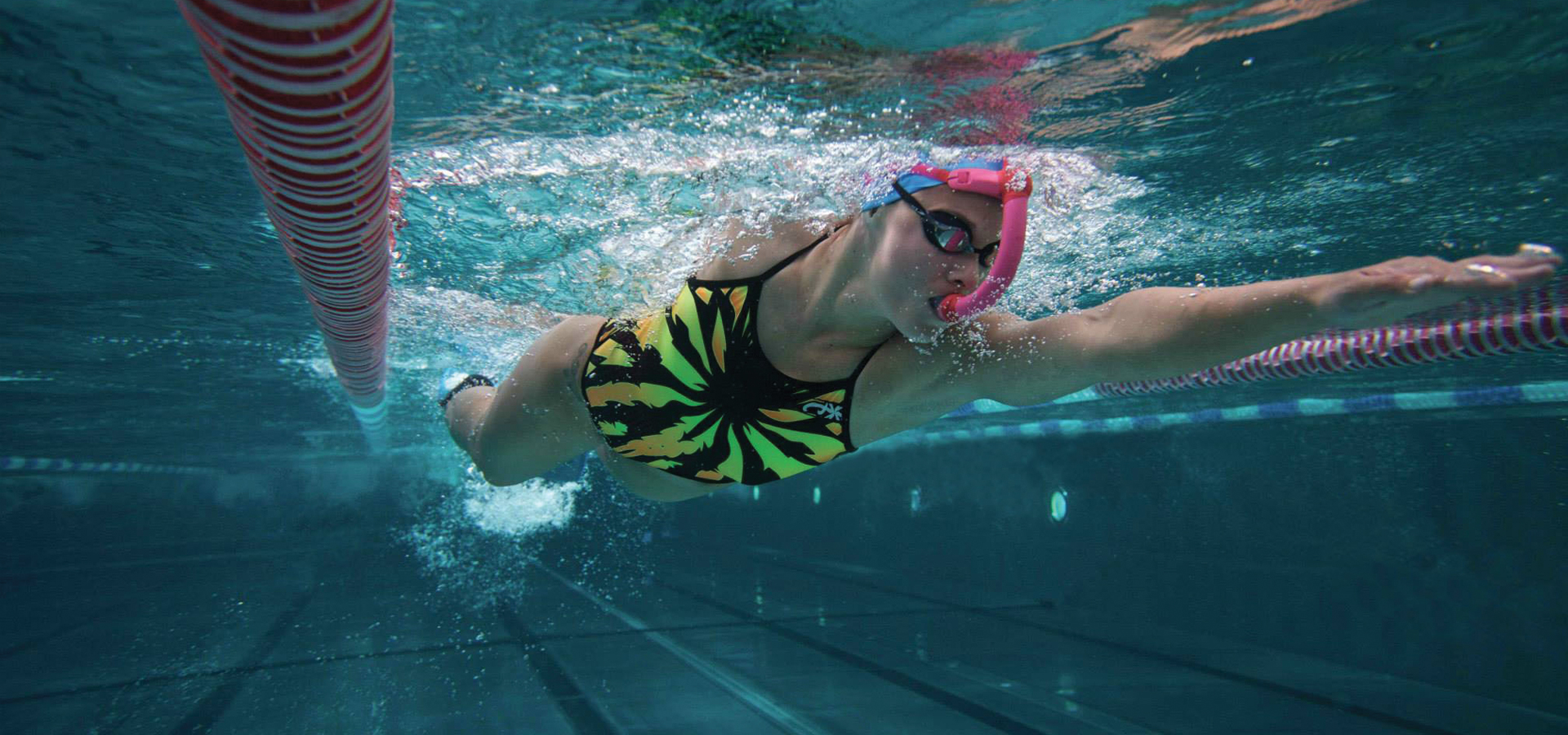
A front snorkel is a swim snorkel mounted on the front of the forehead, in line with the body. Unlike diving or recreational snorkels — worn on the side of the head — it lets you swim with your head aligned with your spine, without rotation or lateral deviation.
Read more
The history of the front snorkel: from handmade roots to worldwide distribution
Origins: finswimming
The front snorkel comes from finswimming. In this sport, athletes move at high speed with arms in an arrow position against the head for an optimal hydrodynamic profile.
Read more
A side snorkel — like in scuba — would be incompatible with that position. The snorkel therefore had to sit squarely on the front of the forehead.
For decades these snorkels were handmade: aluminium wire bent by hand to follow the shape of the forehead, neoprene glued on, a rubber strap and a tightening screw to hold the tube. They worked for elite athletes but were not accessible to the general public.
2008: the first commercially distributed front snorkel in the world
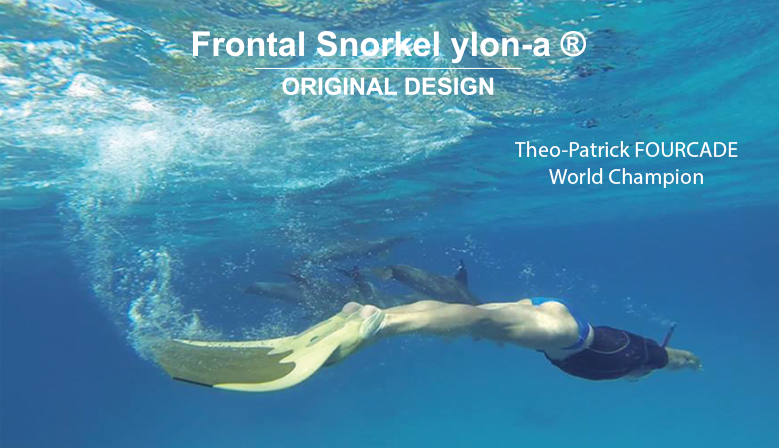
As a high-level athlete — French finswimming team, then French freediving team, 2013 World Champion in Kazan (Russia) in the 100 m speed apnea event, multiple French champion and finalist at World and European Championships — Théo-Patrick Fourcade designed the ylon-a® front snorkel in 2006–2007 from a simple insight: the front snorkel had to move beyond handmade prototypes to reach every swimmer.
In 2008, the first truly mass-produced, commercially distributed front snorkel was launched. The clean, functional design has since been compared to Swedish Malmsten goggles: a timeless look that has barely aged in nearly 20 years. More than 50,000 units have been sold in over 40 countries.
How the front snorkel entered global swimming
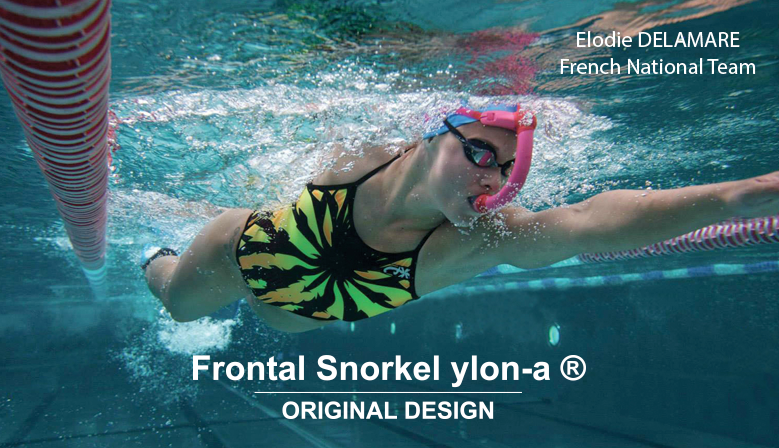
Frédéric Bousquet, a French national team swimmer and world record holder, popularised the front snorkel in swimming. During a session in a French pool he discovered the ylon-a® snorkel — initially supplied through the French Swimming Federation’s “Pass'sport for Water” programme — and brought it to Cercle des Nageurs de Marseille, a hub for France’s top swimmers.
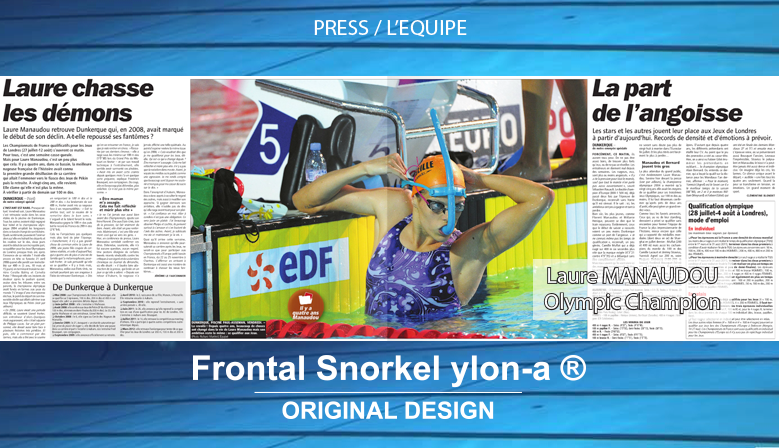
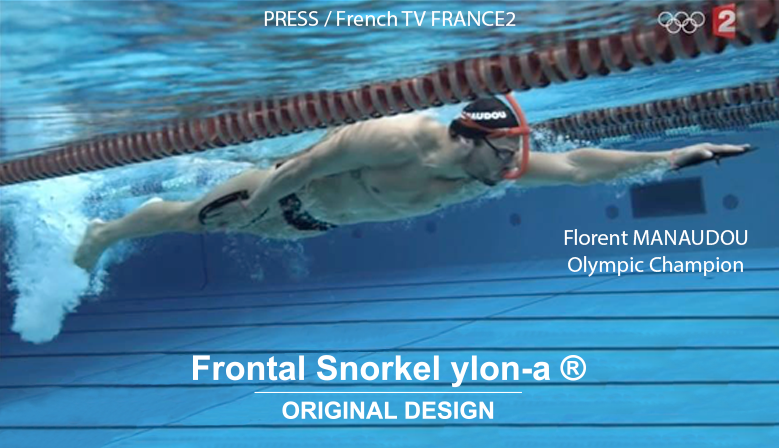
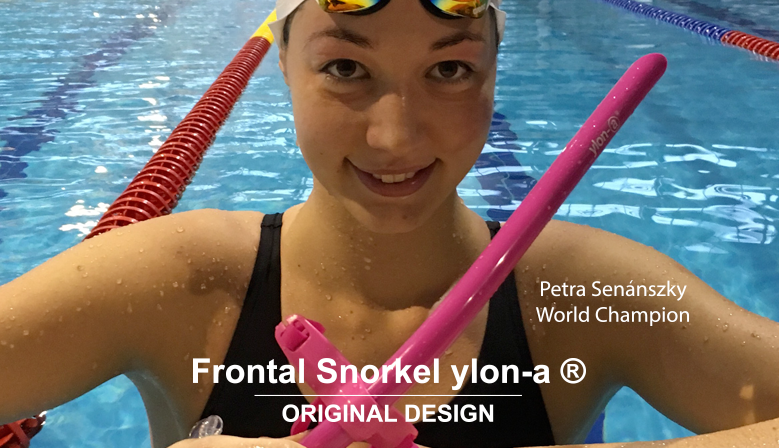
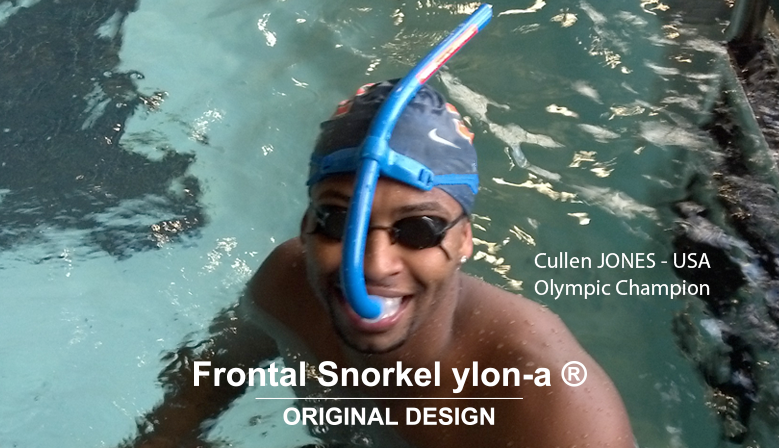
Adoption spread fast. American coaches in Marseille then introduced the ylon-a® snorkel to the United States. The US swim team took the ylon-a® snorkel as official kit to the London 2012 Olympic Games. Olympic swimmers who used this snorkel include Laure Manaudou, Florent Manaudou, Frédéric Bousquet, Cullen Jones, Roland Mark Schoeman and many others.
The ylon-a® model — originally marketed as a youth/beginner finswimming snorkel because of its slimmer diameter (18 mm inner / 22 mm outer) — effectively became the international standard for swim training. It is one of the rare cases where a product designed for one discipline has redefined the training practices of another discipline on a worldwide scale.
The problem of side breathing in freestyle
In freestyle, hand and arm pressure is aimed at propelling the swimmer forward. But each breath to the side breaks alignment when the head turns.
Read more
Part of the propulsion is sacrificed to compensate for this imbalance. Side breathing is a normal constraint of swimming — but it also interrupts technical work.
A swimmer who breathes every two or three arm cycles spends much of the time managing rotation instead of refining pulls. Sustainable focus on stroke quality is hard to maintain.
The solution: temporarily remove the breathing constraint
A front snorkel lets you breathe without turning your head, keeping the head in line with the body. It temporarily removes the breathing constraint so the swimmer can focus on what matters in training:
- Proprioceptive feel (the movement from within)
- Exteroceptive feel (contact with the water, glide, resistance)
- Quality and continuity of the pull
- Body alignment and balance
A tool for every level
A front snorkel is relevant at every level:
- Beginners: isolate breathing to focus on balance, flotation and propulsion.
- Intermediate swimmers: train pulls continuously on long sets without interruption.
- Elite athletes: refine technique with precision and duration that are impossible without a snorkel.
Front snorkels in competition: what the rules say
Swimming: training only
Front snorkels are not permitted in competitive swimming. No breathing equipment is allowed in official FINA/World Aquatics events. Use is limited to training — which is precisely why the snorkel is valuable: it lets you work on technique without constraint of breathing.
Read more
Finswimming: regulated, homologated equipment
In finswimming, the front snorkel is official competition equipment, regulated by CMAS (World Underwater Federation) and national federations such as FFESSM in France.
CMAS rules include:
- Maximum snorkel length: 48 cm
- The snorkel may be cut by the meet referee for homologation
- Diameter may vary by category (youth, senior, competition)
ylon-a® snorkels measure exactly 48 cm — the maximum regulatory length. They are therefore eligible for CMAS competition.
Note: a front snorkel is not designed for and must not be used for breath-hold diving or scuba. Those activities require specific, regulated equipment.
How to choose a front snorkel
Essential criteria
A good front snorkel is one you forget after the adaptation phase. It must add no extra constraint — it should let you focus on swimming.
Read more
Here are the criteria that really matter:
- Rigidity: the tube must be stiff and non-deformable. A soft tube vibrates and disrupts the stroke.
- Stability: the head bracket must hold everything with no flex. No play, no vibration.
- Proximity to the face: the snorkel should sit close to the forehead, almost touching the nose — not far from the face.
- Appropriate diameter: finer for swimming (easier clearing); wider for competitive finswimming.
- Certified materials: check compliance with NF EN 1972.
- Instructions: the snorkel must ship with clear guidance.
Front snorkel for swimming vs finswimming
Two ylon-a® models match each use case:
- YSTI01 (22 mm outer Ø) — swim snorkel: slimmer tube, ideal for freestyle training. Easier to clear; widely adopted for swimming worldwide.
- YSTA01 (25 mm outer Ø) — finswimming snorkel: larger bore for high-intensity finswimming.
Children vs adults
In swimming, children and adults use the same model (YSTI01). However, INPP guidance recommends not using this diameter for children under 1.50 m tall without coach supervision. In a club or structured swim school there is no legal restriction — FFN and FFESSM use these snorkels freely with young swimmers.
What to avoid, the mistakes:
- Soft or flexible snorkels: they vibrate and degrade training quality
- Flexible brackets or designs that hold the tube away from the face
- Silicone elbow pieces with valves: frequent source of frustration
- Products with no certification or instructions
- Swimming with the head lifted: it traps water in the snorkel and creates turbulence
- Head positionned with the chin toward the chest: loss of alignment and water entering the snorkel
NF EN 1972 certification: why it matters
NF EN 1972 is the European certification that governs swim snorkels. It guarantees material safety, mechanical strength and safe use. The ylon-a® front snorkel is currently the only front snorkel sold with this certification, attested by INPP (French National Institute for Professional Diving). This is a non-negotiable safety criterion, especially for use with children or in professional settings (clubs, swim schools).
The ylon-a® front snorkel: why it’s the original
Many front snorkels are on the market today — Arena, Speedo and others offer their versions. Most borrow directly from the ylon-a® design. How do you tell the original from a copy?
Read more
Simply because only the original can guarantee:
- The original 2006–2007 design, created by a world champion from real-world experience
- The only NF EN 1972 certification on the front snorkel market
- Full CMAS compliance (exactly 48 cm length)
- More than 50,000 units sold in over 40 countries since 2008
- Use by Olympic swimmers (Laure Manaudou, Florent Manaudou, Frédéric Bousquet, Cullen Jones…)
- The lowest price on the market — the original costs less than copies
“A design as timeless as Swedish Malmsten® goggles.” — Swimmers and coaches who adopted the ylon-a® snorkel
Choosing ylon-a® supports the innovator who democratized this accessory — and you get the only certified, compliant product designed for learning, training and preparation for performance.
Theo-Patrick FOURCADE
FAQ — Frequently asked questions about the front snorkel
Read more
Are front snorkels allowed in swimming competition?
No. No snorkel is allowed in official swimming competition (FINA/World Aquatics). The front snorkel is a training tool. In finswimming it is mandatory in competition and regulated by CMAS (max. length 48 cm).
Which front snorkel should beginners choose?
The YSTI01 model (22 mm outer diameter) is recommended for beginners. Its slimmer bore makes clearing water and adaptation easier. It is the model adopted worldwide by clubs and swim schools.
Can children use a front snorkel?
Yes, in a club or supervised swim school. INPP guidance states that for children under 1.50 m, use should be supervised by a qualified coach. FFN and FFESSM use them freely with young swimmers.
What is the difference between YSTI01 and YSTA01?
YSTI01 (22 mm Ø) is the swim snorkel — slim, light, ideal for freestyle. YSTA01 (25 mm Ø) is the finswimming snorkel — wider for high effort and CMAS competition. Same length: 48 cm regulatory.
Why is ylon-a® cheaper than copies?
Because we sell direct, with no middleman. Resellers who sell copies add their margins. With ylon-a® you buy the original at producer price.
What is NF EN 1972 and why does it matter?
It is the European safety standard for swim snorkels. It guarantees material safety, strength and safe use. The ylon-a® snorkel is the only certified front snorkel on the market. No known copy holds this certification.
Can the snorkel be cut for competition?
Yes. If the meet referee requires it, the snorkel can be cut on site to meet the 48 cm CMAS maximum. ylon-a® models measure exactly 48 cm — no cutting needed.